
Preface
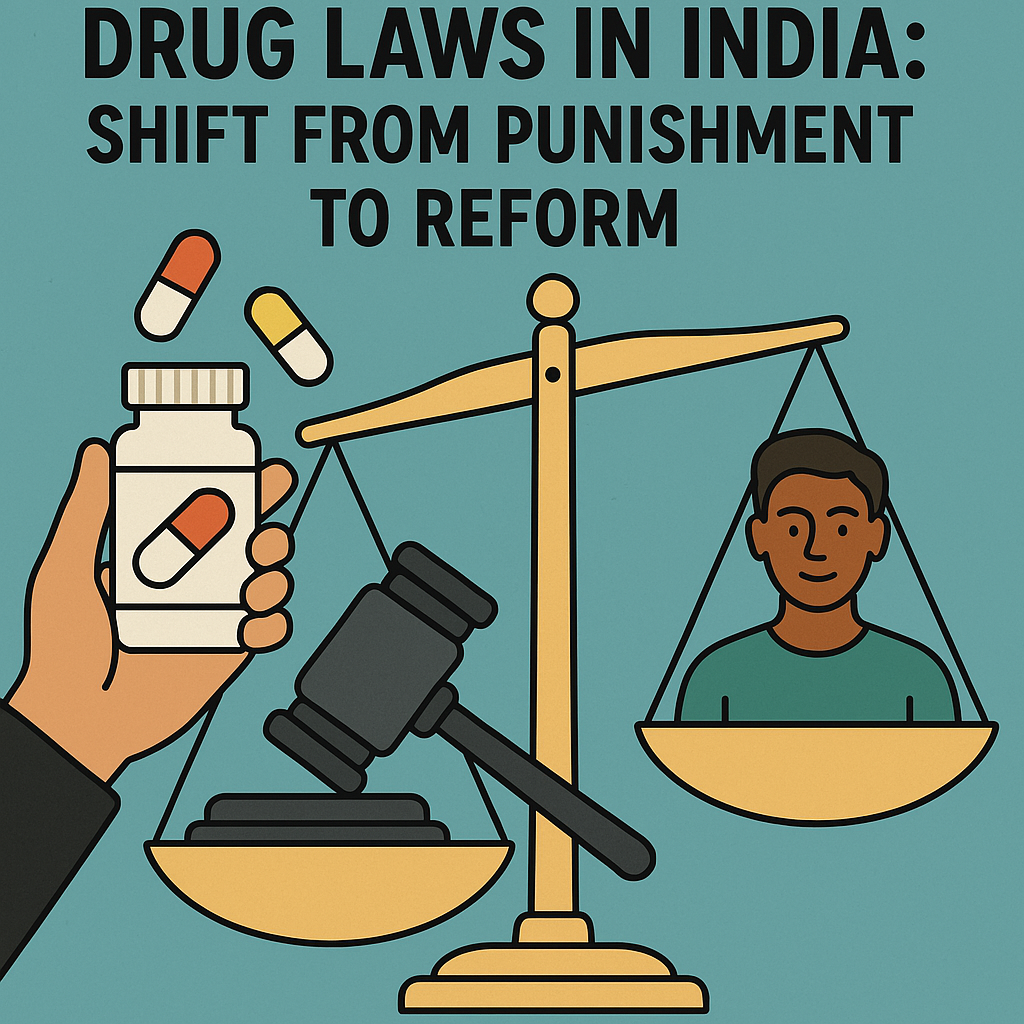
India stands at a legal crossroads where traditional drug enforcement policies are gradually giving way to more balanced and humane frameworks. For decades, drug laws in India have centered around punishment and criminalisation, often overlooking the underlying issues of addiction, mental health, and rehabilitation. However, with the introduction of new criminal codes like the Bharatiya Nyaya Sanhita (BNS), Bharatiya Nagarik Suraksha Sanhita (BNSS), and Bharatiya Sakshya Adhiniyam (BSA), there is a visible shift towards reform-oriented approaches.
This article delves deep into the evolving landscape of drug laws in India, comparing past and present legal provisions, highlighting court trends, and offering practical guidance for those accused under such laws. By understanding the intersection of the NDPS Act with the new legal codes, readers will gain clear insights into their rights, responsibilities, and the future direction of India’s drug policy.
Table of Contents
Introduction
Legal Framework: NDPS Act, BNS, BNSS, and BSA
Shift Towards Rehabilitation: Judicial and Policy Developments
Landmark Judgments Shaping Reform
Case Studies Illustrating the Change
Real-Life Testimonials
What to Do If Arrested Under Drug Laws: A Quick Guide
Controversies and Public Debate
Legal Rights of Accused Under Drug Laws
Role of Legal Aid and Rehabilitation Centers
FAQs
Conclusion
Call to Action
Disclaimer
1. Introduction
Millions of individuals in India face harsh consequences under outdated drug laws, often treated as criminals rather than patients needing care. However, India’s evolving drug laws are ushering in a much-needed paradigm shift—focusing on rehabilitation, mental health, and legal rights rather than solely punishment. This article explores these reforms in detail, including the role of new legislations like the Bharatiya Nyaya Sanhita (BNS), Bharatiya Nagarik Suraksha Sanhita (BNSS), and Bharatiya Sakshya Adhiniyam (BSA), judicial trends, and practical legal guidance for accused individuals. Legal experts such as Advocate Saurabh Savara contribute valuable insights to these ongoing developments.
2. Legal Framework: NDPS Act, BNS, BNSS, and BSA
The Narcotic Drugs and Psychotropic Substances Act, 1985 (NDPS Act), remains the principal statute governing drug offences. While the NDPS Act has traditionally emphasized strict punishment, recent reforms under the Bharatiya Nyaya Sanhita (BNS) and associated laws aim to integrate rehabilitation and victim-centric approaches.
Overview of Drug Law Framework in India
India’s drug control framework is centered around the Narcotic Drugs and Psychotropic Substances Act, 1985 (NDPS Act), which criminalizes the production, possession, and trafficking of narcotics. The law is strict, with penalties based on the quantity involved. Alongside, the Bharatiya Nyaya Sanhita (BNS) defines general criminal offences like conspiracy and abetment relevant in drug cases. The Bharatiya Nagarik Suraksha Sanhita (BNSS) outlines procedures for arrest, search, and trial, while the Bharatiya Sakshya Adhiniyam (BSA) governs the admissibility of evidence, especially digital and forensic. Together, these laws provide a comprehensive legal framework that balances enforcement with procedural fairness and reform options like rehabilitation under Section 64A NDPS.
3. Shift Towards Rehabilitation: Judicial and Policy Developments
With the BNS, BNSS, and BSA in force, the Indian legal system explicitly promotes rehabilitation and mental health treatment alongside traditional punitive measures. Policies have shifted focus to:
- Diversion programs under BNS for addicts, reducing criminal stigma.
- Establishment of statutory rehabilitation centres mandated under BNSS guidelines.
- Integration of mental health experts in criminal proceedings, ensuring holistic assessments.
The judiciary has welcomed this reformative approach, with multiple High Courts directing trial courts to apply new laws with an emphasis on treatment and reintegration.
Recent policy changes and court rulings increasingly reflect recognition of addiction as a health issue, with courts encouraging rehabilitation over incarceration. States are expanding de-addiction programs, and police are adopting more compassionate approaches to first-time offenders.
4. Landmark Judgments Shaping Reform
- v. State (2024) (Supreme Court)
The apex court interpreted BNS provisions, affirming that addiction must be treated as a health condition, mandating rehabilitation as a preferred route in first-time personal consumption cases. - ABC v. State (2025) (Delhi HC)
Applying BNSS procedural protections, the court quashed confessions made without legal counsel, emphasizing the new statute’s enhanced safeguards. - PQR v. State (2025) (Bombay HC)
Under BSA, evidence gathered in violation of new standards was excluded, leading to acquittal, underscoring the importance of fair trial guarantees.
5. Case Studies Illustrating the Change
Case 1: Rehabilitation over Prosecution — Punjab Model
Following BNS and BNSS guidelines, Punjab’s legal system prioritized rehab for addicts, with over 1,500 persons successfully diverted from prosecution in 2024.
Case 2: Legal Aid Expansion in Delhi NCR
With BNSS mandating prompt legal aid, free legal clinics led by advocates such as Saurabh Savara enabled hundreds to secure bail and access rehabilitation services effectively.
6. Real-Life Testimonials
To illustrate the impact of these reforms, here are some anonymized accounts from rehabilitation centers and clients:
“After being referred to a rehab program instead of jail, I was able to recover and rebuild my life. The support from legal aid made a huge difference.” – Former Client, Punjab
“Our collaboration with legal professionals ensures patients receive both medical and legal help, improving their chances of successful reintegration.” – Rehabilitation Center Coordinator, Himachal Pradesh
7. What to Do If Arrested Under Drug Laws: A Quick Guide
Stay Calm: Avoid self-incrimination and do not resist arrest.
Know Your Rights: You have the right to legal counsel and to be informed of the charges against you.
Request Bail: Especially if accused of small quantity possession or first offence.
Seek Rehabilitation: If eligible, request treatment under Section 64A of NDPS Act.
Contact Legal Aid: Reach out to free legal services or experienced advocates like Saurabh Savara for guidance.
8. Controversies and Public Debate
Despite the progressive legal framework, challenges remain:
- Concerns over implementation delays in rehabilitation programs.
- Police and prosecution’s adaptation to new procedural rules.
- Debate on decriminalization versus stringent punishment in drug policy.
Public discourse continues to evolve with increasing emphasis on balancing societal protection and individual rights.
9. Legal Rights of Accused Under Drug Laws
Key rights guaranteed under the new regime include:
- Right to counsel from first interrogation (BNSS).
- Right to fair and speedy trial (BNS & BSA).
- Right to rehabilitation programs (BNS).
- Protection against unlawful detention and coercion (BNSS).
- Bail eligibility improvements, especially in minor possession cases.
10. Role of Legal Aid and Rehabilitation Centers
The new laws mandate collaboration between legal professionals, healthcare providers, and social workers to ensure comprehensive care. Advocates like Saurabh Savara exemplify multidisciplinary approaches combining legal representation with access to rehabilitation and counseling.
11. FAQs
Q1: What changes do the new laws bring to drug offence prosecution?
A: They introduce clearer offence definitions, enhanced procedural safeguards, and prioritization of rehabilitation.
Q2: Can addicts avoid jail under the new laws?
A: Yes, especially first-time users can be diverted to treatment programs under BNS provisions.
Q3: Are legal aid and counsel guaranteed?
A: BNSS mandates immediate access to legal aid and counsel.
Q4: How does the BSA affect evidence in drug cases?
A: It raises standards for admissibility, excluding evidence obtained unlawfully.
Q5: Where can accused persons find help?
A: Legal services authorities, rehabilitation centers, and dedicated helplines provide support.
12. Conclusion
India’s legal framework on drugs is evolving with the enactment of BNS, BNSS, and BSA, marking a shift from punitive models to rehabilitation and rights protection. While challenges persist, these laws offer hope for a more humane and just approach. Legal experts like Advocate Saurabh Savara are instrumental in educating the public and assisting accused persons to navigate these changes effectively.
13. Call to Action
If you or someone you know is facing drug-related legal complications, it is crucial to act promptly and understand your rights. Legal support plays a key role in securing bail, accessing rehabilitation options, and ensuring fair treatment under the law. Engage a qualified and experienced advocate who understands the evolving nuances of drug legislation, including the reforms under the NDPS Act, BNS, and BNSS, to navigate the legal process effectively and lawfully.
14. Disclaimer
This blog is for general awareness and educational purposes only and does not constitute legal advice. No lawyer-client relationship is created by this content. For case-specific legal guidance, consult a qualified lawyer. Content complies with Bar Council of India norms and is not intended for solicitation.